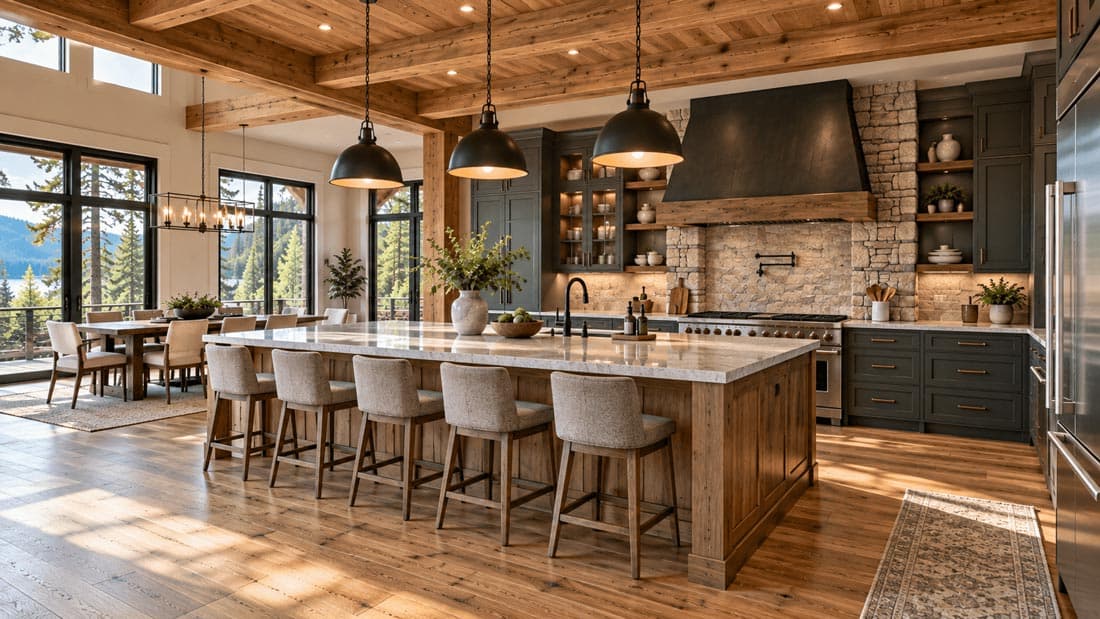
New home build
How a full-house estimate works.
Plain-language math for land through soft costs—ZIP adjustments, ranges, and the limits of any cost tool. Pricing a single remodel? See the project method.
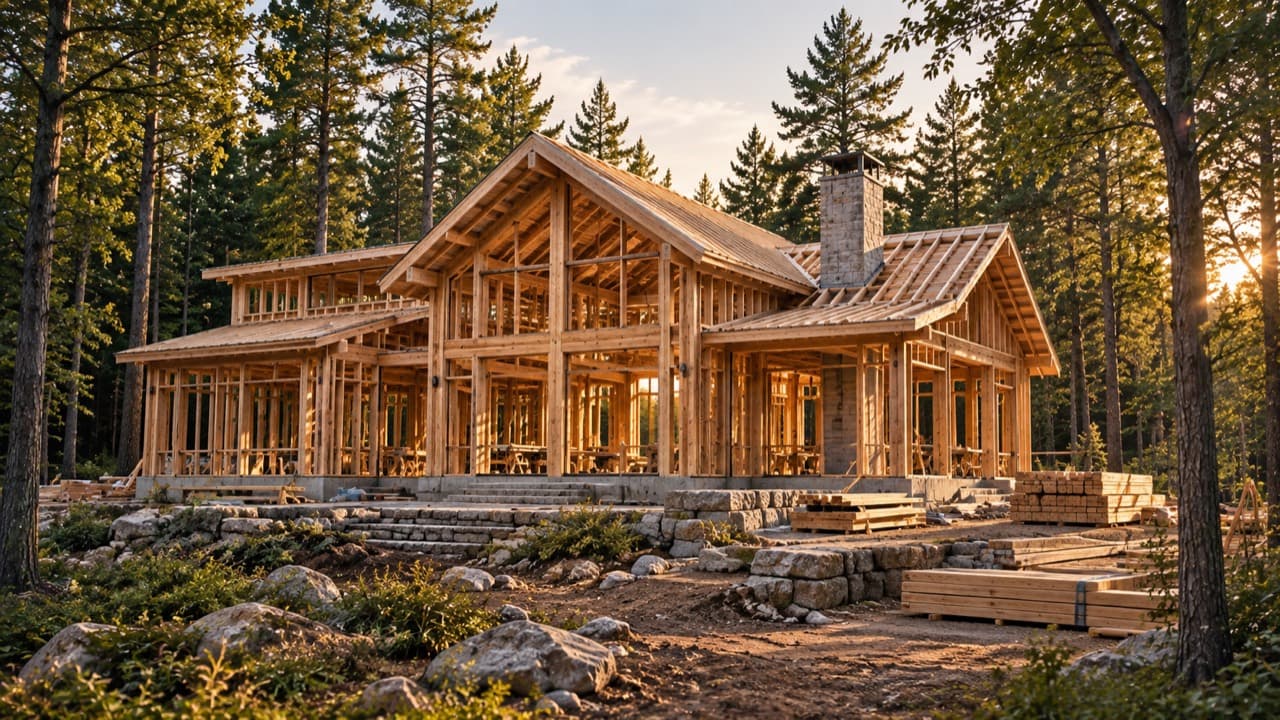
Each chapter—land, site, structure, soft costs—gets its own line and its own range.
Purpose
What this tool is—and what it isn’t
True Build Cost is a planning estimator. It helps you assemble a rough all-in range for buying land and building a house—before you have bids in hand.
It is not a contractor quote, an appraisal, a lender’s underwriting number, or a guarantee of what you’ll pay. Treat every figure as a starting point for conversations with surveyors, builders, and lenders—not a final budget.
Calculation
How we calculate a line item
Every cost chapter starts from a national baseline band—then we scale it by your choices and where you’re building.
01
Start with a baseline
Each line has a national low / expected / high from cost indexes and build surveys—refreshed on a quarterly cadence, not on every page view.
02
Apply your inputs
Acreage, driveway length, square footage, finish level, garage stalls, soil proxy—and similar knobs reshape that baseline for your scenario.
03
Tune for location
Your ZIP’s labor, land, and permit multipliers—plus rurality for remote site work—pull the result toward local reality.
04
Add only what you commit
A line stays out of your total until you add it. Skip it and it counts as $0. The running total grows from zero on purpose.
Soft costs like construction-loan interest and contingency are derived from the hard-cost total you’ve assembled—so the buffer scales with the project you’re actually planning.
Sources
Where the prices come from
Baselines are synthesized from publicly discussed construction cost indexes, regional build surveys, and typical unit rates for site work. We do not scrape live contractor bids or claim a private MLS of build costs.
State and metro multipliers are curated relativities: coastal and high-demand metros sit above 1.0; lower-cost regions sit below. Rural ZIPs without a mapped metro inherit the state average and a rurality bump on site-sensitive lines.
City and ZIP labels come from a national postal place table—then we map that ZIP into our multiplier model.
Location
How your ZIP changes the math
Location isn’t a cosmetic label. Three multipliers stack onto the relevant chapters—plus rurality when you’re far from municipal infrastructure.
Labor
Trades and general construction intensity for your state or metro.
Land
Relative land and entitlement pressure—the big swing in high-demand metros.
Permits
Fee and process friction baked into soft-cost and hookup lines.
That’s why the same house plan can look very different in downtown Austin versus wooded northern Michigan.
Ranges
Low, most likely, and high
Every active line carries a three-point band. We sum those into your project total. The spread is intentional—narrow certainty is usually a lie this early.
Low
Best case
Things go smoothly—favorable soils, clean bids, little rework.
Expected
Most likely
Our planning center: the figure we highlight for comparisons.
High
If friction shows
Delays, harder site, richer finishes, or change orders.
When you replace a line with a real quote, that line collapses to a single number—and the overall band tightens.
Scope
What’s included
“All-in” means land through a livable house, plus soft costs that usually surprise first-time builders: clearing, driveway, well or city water, septic or sewer, power, foundation, shell, systems, kitchen, baths, interiors, garage, plans, permits, construction-loan carrying cost, and contingency.
It typically does not include furnishings, décor, landscaping beyond clearing, pools, detached shops, long-term mortgage principal, or ongoing property taxes.
Quotes
When you have a real number
Got a driveway quote—or you already bought the lot? Lock that line to your figure. We keep estimating everything else. That’s the workflow: replace assumptions with evidence as you get it.
Reality
Why these numbers keep moving
Construction economics don’t sit still. Lumber and concrete swing. Insurance and interest reshape soft costs. Local labor shortages reprice the same scope months later. Our multipliers are relativities we revisit—not eternal constants.
If you return next quarter and a line looks different, that can be healthy. The job is to stay oriented to current planning reality—not freeze a PDF forever. Re-check before a land offer or financing lock.
Bottom line: True Build Cost is a compass, not a contract. Compare places, stress-test a program, walk into pro conversations prepared—then let local bids replace our ranges.
Practice
How to use this well
Five habits that keep the estimate useful instead of decorative.
- Start with your real ZIP—location drives the multipliers.
- Add the costs that apply; skip what you won’t need ($0).
- Focus on most-likely and the width of the band—not a fake single dollar.
- Keep builds and compare places when choosing where to buy land.
- Replace lines with real quotes as soon as you have them.
Keep going
Checklist the chapters—or price a remodel
This page is how full-house math works. The land & build checklist explains each chapter. Pricing one job on an existing home? Use the project method instead.
Frequently asked questions
Projects & remodel
Need a range for one job?
Roofing, HVAC, kitchen, and more—ZIP-tuned planning ranges for a single remodel or improvement, not a whole new house.